RAMAYANA is not only a tale of legendary hero Lord RAMA’S heroic adventures but every incident adventure contains a gem of wisdom.
ॐ श्री महागणाधिपतये नमः,
ॐ श्री उमामहेश्वराभ्याय नमः।
वाल्मीकि गुरुदेव के पद पंकज सिर नाय,
सुमिरे मात सरस्वती हम पर होऊ सहाय।
मात पिता की वंदना करते बारम्बार,
गुरुजन राजा प्रजाजन नमन करो स्वीकार।।
हम कथा सुनाते राम सकल गुणधाम की,
ये रामायण है पुण्य कथा श्री राम की।।
जम्बुद्विपे भरत खंडे आर्यावर्ते भारतवर्षे,
एक नगरी है विख्यात अयोध्या नाम की,
यही जन्म भूमि है परम पूज्य श्री राम की,
हम कथा सुनाते राम सकल गुणधाम की,
ये रामायण है पुण्य कथा श्री राम की,
ये रामायण है पुण्य कथा श्री राम की।।
The name RAMAYANA means “RAMA” + “AAYANA”, whereas RAMA is name of Lord or God and AAYANA means path or way. The literal meaning of the name is “the journey of RAMA or the career of RAMA” or in other words path or way taken or chosen by RAMA during the human life cycle form at earth, during the Treta Yuga (869000 years ago) in jamoudweep (Java Plum) Aryavart/India (5th century BCE).
The RAMAYANA is an ancient Indian epic, composed by some in the 5th century BC, about the exile and return of RAMA, Prince of AYODHYA. It was composed in Sanskrit by Sant VALMIKI, who taught it to RAMA’S twins LUV and KUSH. The basic story is about palace politics, battles, philosophy, ethics and notes on duty.
The character in RAMAYANA presented with all their human foibles and failings, leads more towards an ideal state of things: RAMA is the ideal son and king, SITA is the ideal wife, HANUMAN the ideal devotee, LAKSHMAN and BHARAT the ideal brothers, And even RAVANA, the demon villain, is not entirely despicable.
RAMA is worshipped as an incarnation of God VISHNU and it is not uncommon to trace/find a RAMA Temple in almost every other neighborhood in the country in the northern parts of India, especially on the Gangetic belt. In the country of South-East-Asia, such as Cambodia, Indonesia, and Malaysia, the story of RAMA continues to be held through intricately crafted shadows and puppet shows.
Let us focus our attention on the teachings of Lord Rama as being displayed through the serial which is being watched by us under T.V. sets. It becomes obligatory on the parts of the best elders, the experienced, wisdom laden people to share their mind with the young generation to bridge the existing gulf between the old and new. The composer of the epic RAMAYAN the eternal treasurer of eternal values and virtues was the contemporary of the 5th century.
It is said that the VALMIKI is known mostly from the great epic of Hindus called “RAMAYAN” the life story of Lord RAMA. It is believed that VALMIKI exists in Treta Yuga and envisioned the life of Lord RAMA as the events occurred with the blessings from Lord BRAHMA.
RAMA, prince of AYODHYA won the hand of the princess SITA but was exiled with her and his brother LAXMAN for fourteen years through the plotting of his stepmother. In the forest, SITA was abducted by RAVANA and RAMA gathered an army of monkeys and bears to defeat RAVANA. In order to prove her chastity, Mata Sita entered the fire, but was vindicated by the Gods and restored to her husband RAMA.
VALMIKI is known to be the first poet in the Sanskrit who wrote RAMAYANA the very first poem designed in Sanskrit consisting of 24000 verses and is called Adi-Kavya (The first poem).
VALMIKI is not the birth name but got this name after he came out of the anthill where he underwent penance to recite the holy name of Lord RAMA. His actual name was RATNAKAR, which was given by his real parents. His father was a sage named PRACHETA.
At a very young age, RATNAKAR went into the forest and got lost. A hunter who was passing by saw RATNAKAR and took him under his own care. Under the love and care of his foster father/parents, RATNAKAR forgot his original parents. Under his father’s guidance, RATNAKAR turned out to be an excellent hunter.
On approaching at marriageable age, he was married to a beautiful girl from hunter’s family. In a few years he was blessed with few children. As his family grew large, he found it next to impossible to feed them. As a result, he took to robbery and began looting people passing through the forest.
One day, the great sage NARADA while passing through the jungle, was attacked by RATNAKAR. As NARADA played his veena and sang praises of God, he saw a transformation coming over RATNAKAR. Then he asked him whether the family, for whom he was robbing others, well partake in his sins also. He went to ask the same question to his family and on being refused by all of them he went back to sage NARADA. NARADA wanted to teach him the sacred name “RAMA” and asked him to sit in meditation, chanting “MARA”, until the time NARADA came back.
RATNAKAR followed the same and kept in meditation posture (Tapasya) for years, during his body got completely converted into an anthill. At last, NARADA came to see him and removed all the anthills from his body and told him that his tapasya paid off and God was pleased. RATNAKAR was bestowed with the honor of a BRAHMA rishi and given the name of VALMIKI since he was reborn from the VALMIKA (the ant-hill) and founded his ashram on the banks of river Ganga.
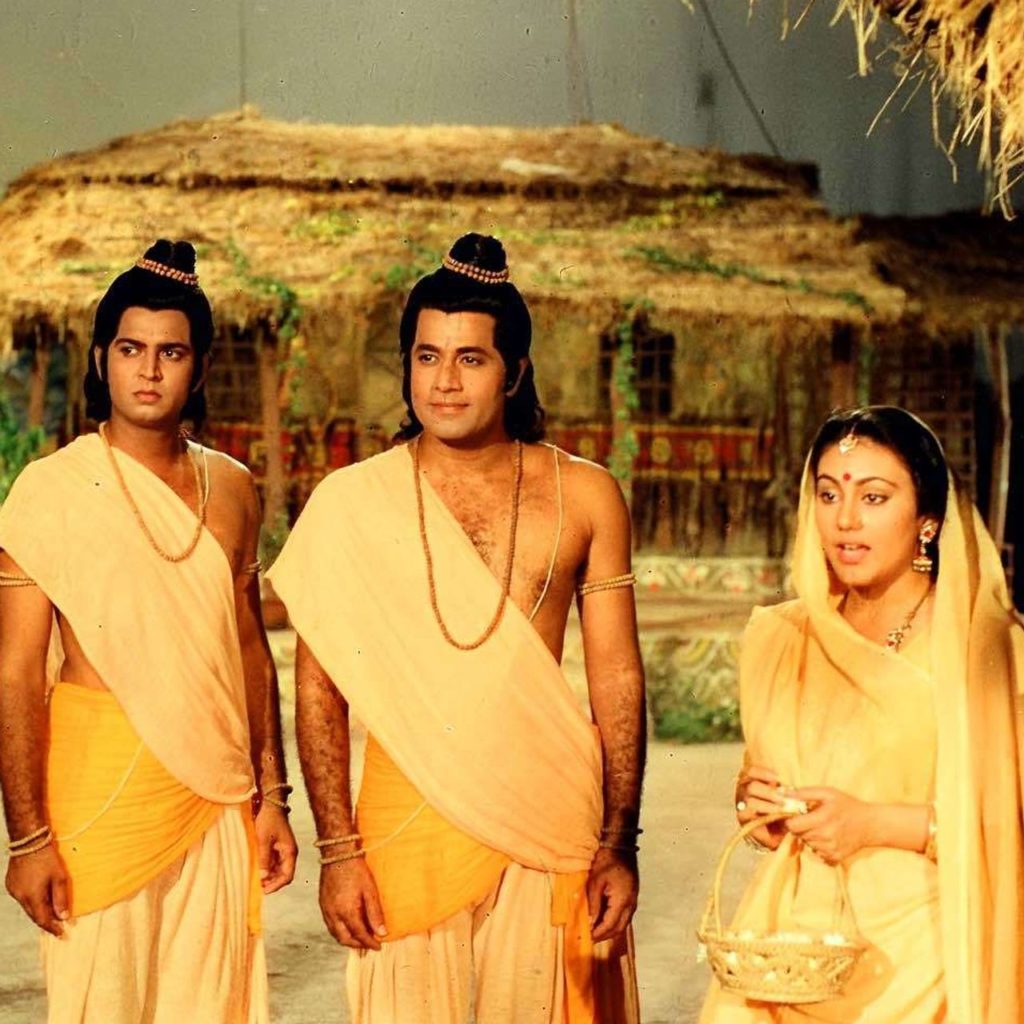
NARADA visited Maharishi VALMIKI in his ashram once and narrated the story of Lord RAMA. Thereafter he received the lightening from BRAHMA in which the Lord asked him to write RAMAYANA in Slokas, which the sage readily followed. One day VALMIKI had the fortune of receiving Lord RAMA, Mata SITA and LAKSHMAN at his ashram.
RAMAYANA is not only a tale of legendary hero Lord RAMA’S heroic adventures but every incident adventure contains a gem of wisdom. There is a need to churn our mind to learn good moral lesson to follow practically to make our life virtuous. The whole story is laden with values/virtues/golden principles of social life. There are many warnings to make us conscious, careful and circumvent.
1. Action done unthoughtfully in Anger always leads to regret and repentance: King DASARATHA was a descendent of the Royal that had produced a river of mighty kings of immortal name and fame. But DASARATHA’S unthoughtful action on the river SARYU led to the death of a young man (Sharavan) and the king had to torment with a guilty conscience. So, think repeatedly before taking any action, as an action done unthoughtfully always lead to regret and repentance.
2. Truth always comes out on top at evil: Epic RAMAYANA teaches us that no matter how powerful evil is, it will always be defeated by good. Truth always wins, no matter how vicious or poisonous life is because even a bitter truth oozes with positivity and the sweetest lie has the darkest agender behind it. The win of good over evil is a universal fate. A person should always have a noble heart and good values. That is how Lord RAMA defeated the most knowledgeable person in history, RAVANA.
3. Unity can overcome any challenge while a house divided cannot stand: All the brothers in RAMAYANA were symbols of true love, brotherhood and sacrificed their interest for their family and remained united by feelings (heartedly) even when they were apart physically. The fruits of togetherness give the power to sail the ship when the tide seems higher than the sky. 4. Relationships are valuable than material gains like money, land, or property: BHARAT declined to occupy (usurp) the throne placed the sandals of his brother (Lord RAMA) relinquished the comforts of the palace, and slept on the ground during self-imposed exile. In exile, LAXMAN accompanied (Lord Rama) and supported him in good and bad. Their love for each other was greater than money, land, and property and that made them exemplary in history. If we hold love higher above anything else in a relationship, the value and respect increase and our soul stays pure.
5. Treat everyone with equality and respect as a true human being: Lord RAMA treated everyone with equality and did not discriminate on the basis of sex, status, age, or caste. Mata SHABRI offered him the already tasted berry fruits, he ate them without giving a second thought. He took the help of vanar sena to build a bridge (Ram Setu) so that he could reach LANKA to liberate Sita MATA from the captivity of RAVANA/Embarrass or irrespective of caste, creed or color.
6. A good company is a panacea: It is well said that your company shapes you into a person you are. RAMAYANA emphasizes the relevance of a good company. Queen KAIKAYI, the third wife of DASHARATHA loved RAMA more than her own son but handmaid MANTHARA poisoned her thoughts with negativity as a result KAIKAI asked for RAMA’S fourteen years of exile. A negative person can brainwash all the good inside you, that is why we should always keep a healthy circle so that we become better with time.
7. Always follow the path of justice and righteousness: King JANAK the father of Mata SITA always follows the path of justice and righteousness and advised Mata SITA to accompany her husband Lord RAMA in his exile as the scriptures teach us that a married woman cannot feel securer at ease outside the house of her master (husband).
8. A woman who deliberates is lost forever: When LAXMAN asked Mata SITA not to step out the LAXMAN Rekha that he marked. She paid no heed to it and as a result, she got lost and suffered a lot.
9. Abandoned the Kama, Krodha, Moha, Lobha (Greed), Pride, Ego (Ahankara), Irshya, Jaddata (Insensitivity), Ghrima (Hatred), Bhaya (Fear). King RAVANA was a highly learned scholar but he was ahead string, arrogant, burning in the fire of anger, lust, and greed that led to his ruin or disaster.
The need of the time is to understand these holy scriptures of ancient times and cultivate these values practically in our daily life to serve society, country, or humanity in a better way. The tales of our legendary heroes and heroines are there to inspire us, motivate us, and guide us on the path of righteousness to overcome the challenges as well as selfish motives.
The whole story of RAMAYANA is full of moral value that directs everyone to follow the path of righteousness. The writer (ASHOK SINGH) feels indebted to his MOTHER who took him to the RAMLILA staged in the village (BIRPUR) during his childhood. After RAMLILA she fed him on the story of Lord RAMA to inculcate in him the internal values and virtues of these legendary heroes. It provides him a strong moral fabric to withstand the challenges of life.
Written by Ashok singh